She Walked In for a New Prescription. She Left With a Deadline.
Free presentation — available now.
Helen had noticed her vision getting worse. She wasn't alarmed. It had been happening gradually for years, and every appointment ended the same way: a stronger prescription, a new pair of lenses, see you next year.
She walked into her ophthalmologist's office on an ordinary Tuesday morning. She walked out a different person.
After reviewing her retinal scan, her doctor delivered the kind of news most patients are never prepared for. Severe macular degeneration in both eyes — the most aggressive case he'd seen in years. Based on the progression visible in her scans, his prognosis was direct, almost clinical in its bluntness:
"Looking at these scans, I'd be amazed if you're not completely blind by this time next year."
Twelve months.
In the minutes that followed, Helen's mind raced through everything she stood to lose. The smiles on her children's faces. The color of their eyes. Watching her grandchildren grow up. Her youngest son's wedding was just thirteen months away — she found herself doing the math, wondering if she'd still have her sight for one of the proudest days of her life.
And then the smaller things. Reading a book. Driving herself to the grocery store. Seeing her own face in the mirror.
What Helen didn't know — what most people over 50 don't know — is that her trajectory isn't unusual. And new research suggests the reason vision degrades as aggressively as it does in millions of Americans has less to do with aging itself, and more to do with a specific process happening inside the eye over time.
Researchers studying retinal cell damage believe cumulative light exposure and oxidative stress may contribute to long-term degeneration of the lens and macula. The process accelerates with age. And it runs quietly in the background — producing no pain, no warning — until the damage becomes visible on a scan.
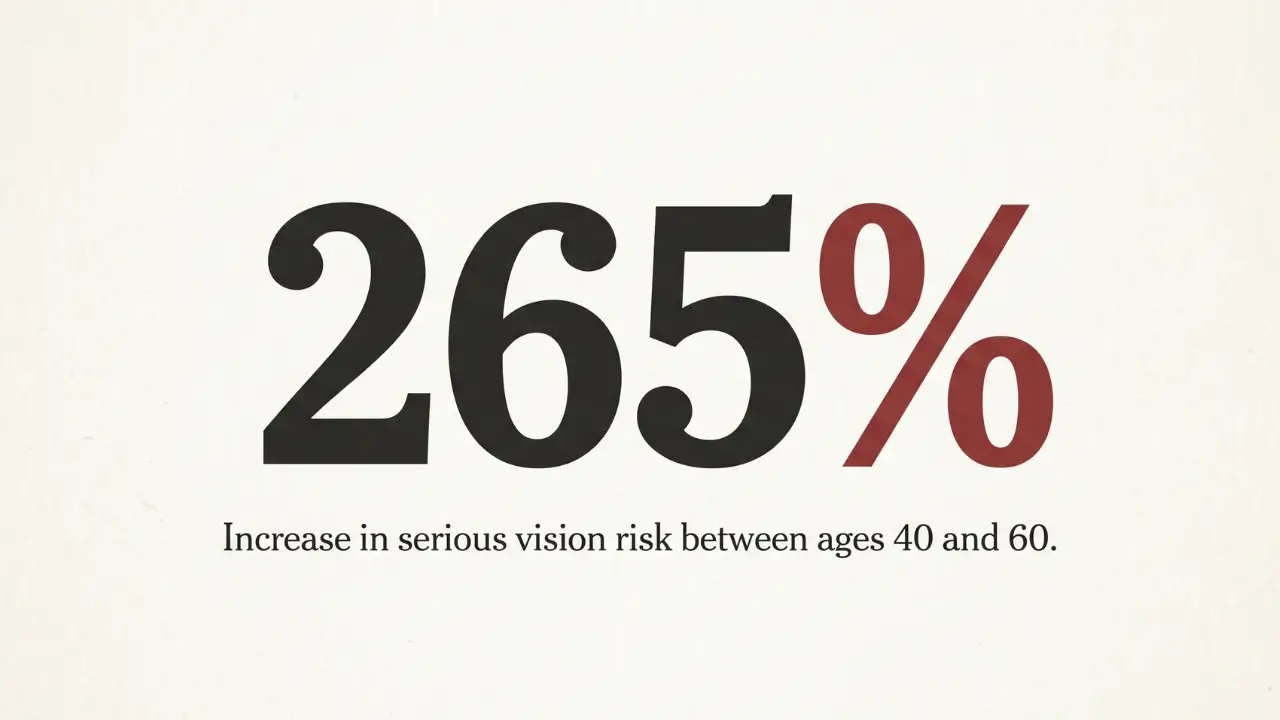
Between ages 40 and 60, the risk of serious vision concerns increases by 265%. A study published in the New England Journal of Medicine found that people with significant vision issues are 17 times more likely to end up in a nursing home.
Yet the standard response from mainstream optometry remains unchanged: here's a stronger prescription, come back next year.
Glasses don't protect your retina. They bend incoming light. The lens keeps degrading behind them. The prescription keeps climbing. Most doctors treat that as simply the nature of things — because addressing the underlying process falls entirely outside the standard model of care.
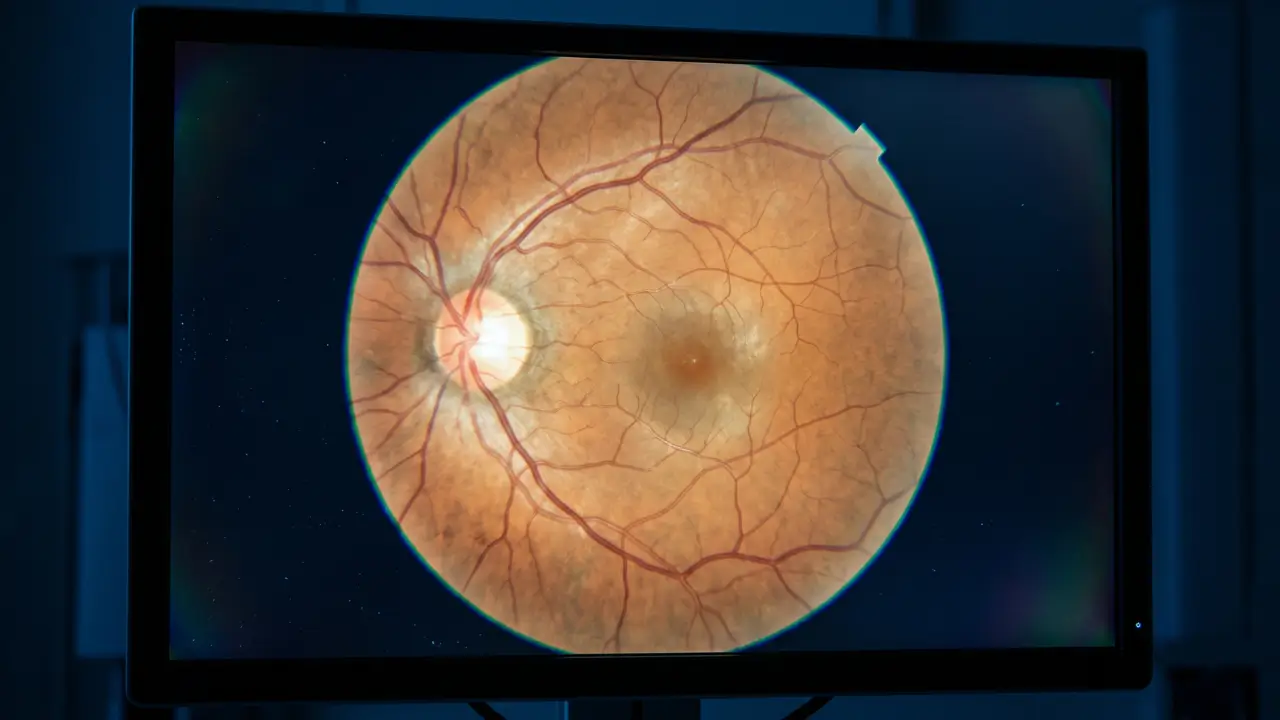
A physician who had been quietly investigating this oxidative process for years — driven in part by watching patients receive the same dead-end diagnoses with no real path forward — eventually found something buried in nutritional research that most ophthalmologists have never been trained to consider.
The compounds he identified occur naturally in the human retina. They're specifically concentrated in the macula — the part of the eye most vulnerable to the kind of damage Helen was experiencing. In published clinical analyses involving adults over 50, participants reported measurable improvements in areas like near vision, night visibility, and sensitivity to glare during the study period.
Helen heard about this research at what felt, to her, like the worst possible time.
It turned out to be exactly the right time.
Her story doesn't end in darkness. But the reason it doesn't isn't what her original doctor prescribed — it's something he never mentioned at all.
Watch Before Your Next Eye Appointment
The presentation examines the research surrounding age-related vision decline — specifically the oxidative processes that vision researchers now believe may contribute to long-term degeneration of the lens and macula. It also covers the nutritional compounds being studied in connection with retinal health and visual performance in adults over 50.
No. The presentation discusses nutritional research and factors associated with long-term eye health. It is intended for informational purposes only and does not replace medical advice, diagnosis, or treatment from a qualified healthcare professional.
Adults over 50 concerned about worsening vision, increasing prescription strength, or maintaining long-term visual independence.